ROLES:
Designer
Brainstormer
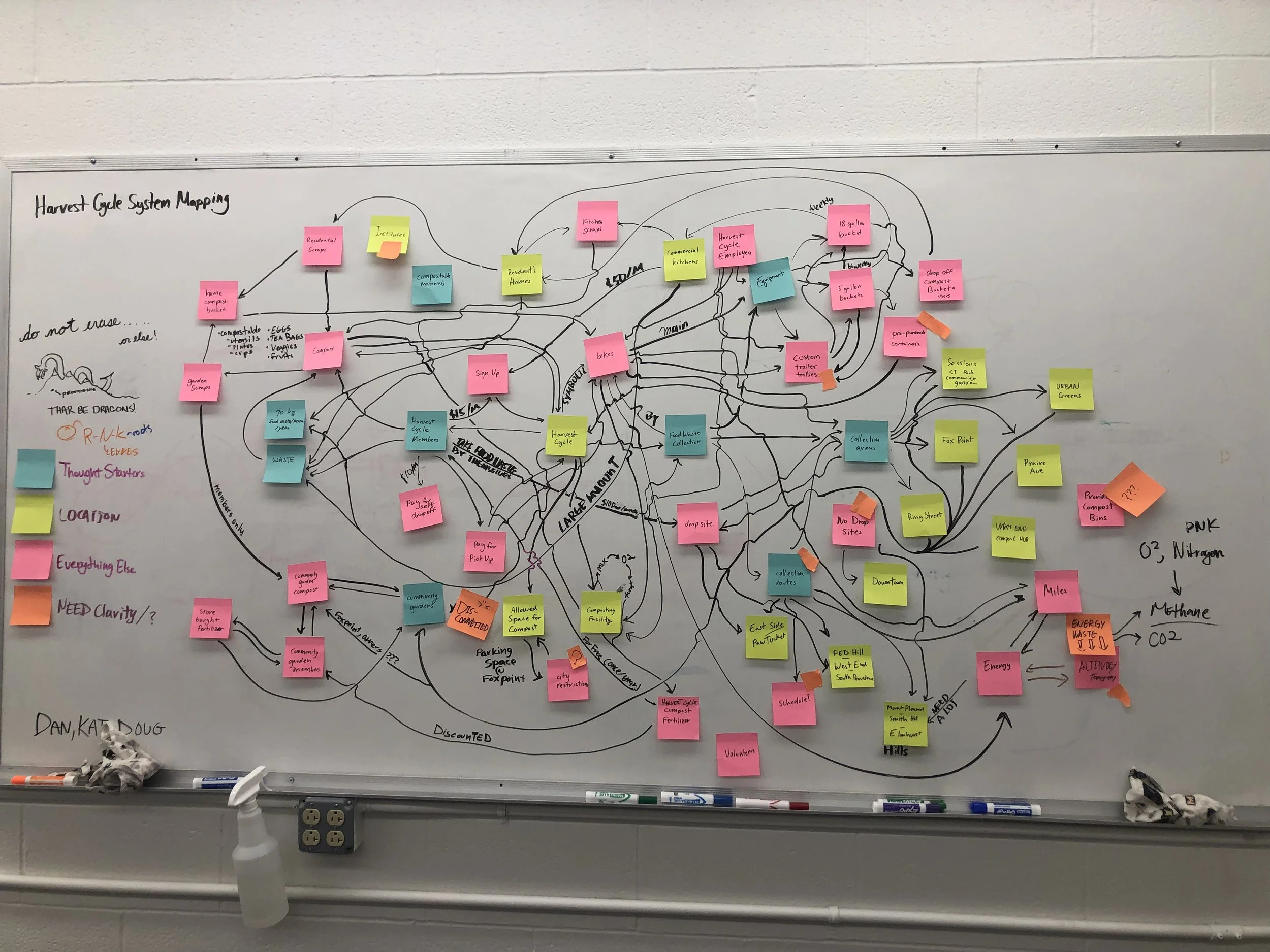
System Mapper
Researcher
Project Manager
My group consisted of an architect, a chemist and a designer. We were matched up with a non profit in Providence, RI called Harvest Cycle. Harvest Cycle is a cycling compost pickup company that also processes compost.
We were given the prompt “improve Harvest Cycle’s system”. We started by conducting user interviews and getting a more in-depth understanding of their system. After multiple rounds of system mapping, we focused in on the actual processing of the compost and the ability to process more if the decomposition time was decreased.
Background
How do you improve a very beloved system? One where you interview users and they have no complaints. We immediately realized that the consumer end of this organization wasn’t the problem, it was for Harvest Cycle to serve more of their community.
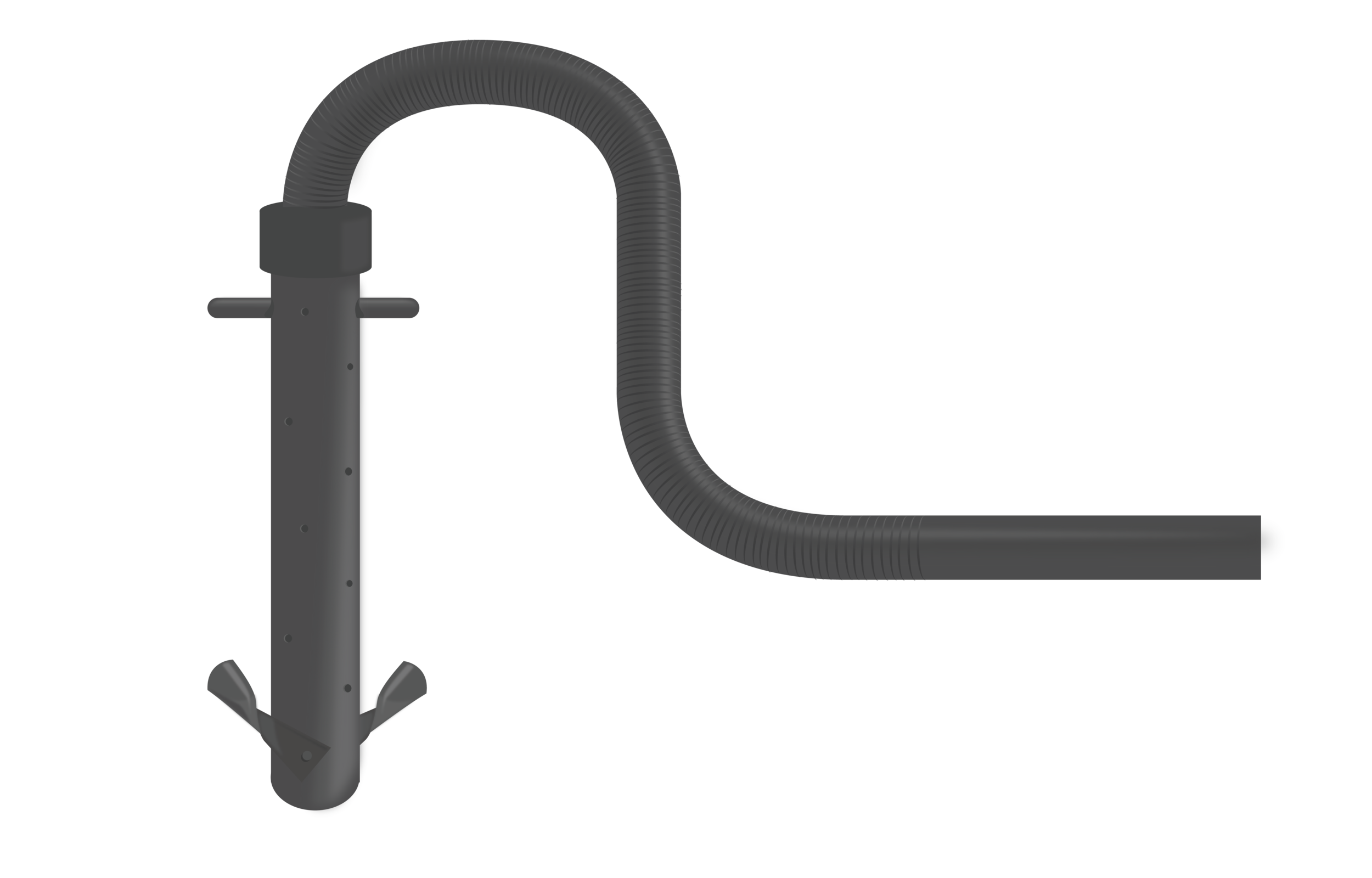
Our final solution was a result of finding that their processing was their biggest issue. We found if we could evenly distribute the bacteria and heat throughout the bins, the compost would decompose faster and more evenly.
How did we get there?
This project went through many iterations and many hopeful ideas followed by many letdowns. We started by volunteering at Harvest Cycle to understand how difficult the process truly was to turn a pile of compost. We followed by interviewing community garden members at the collection sites.
We learned that the problem Harvest cycle was facing was not 1. getting enough clients 2. efficient bikes routes 3. financing. Harvest Cycle’s biggest problem was that they couldn’t break down the compost fast enough.
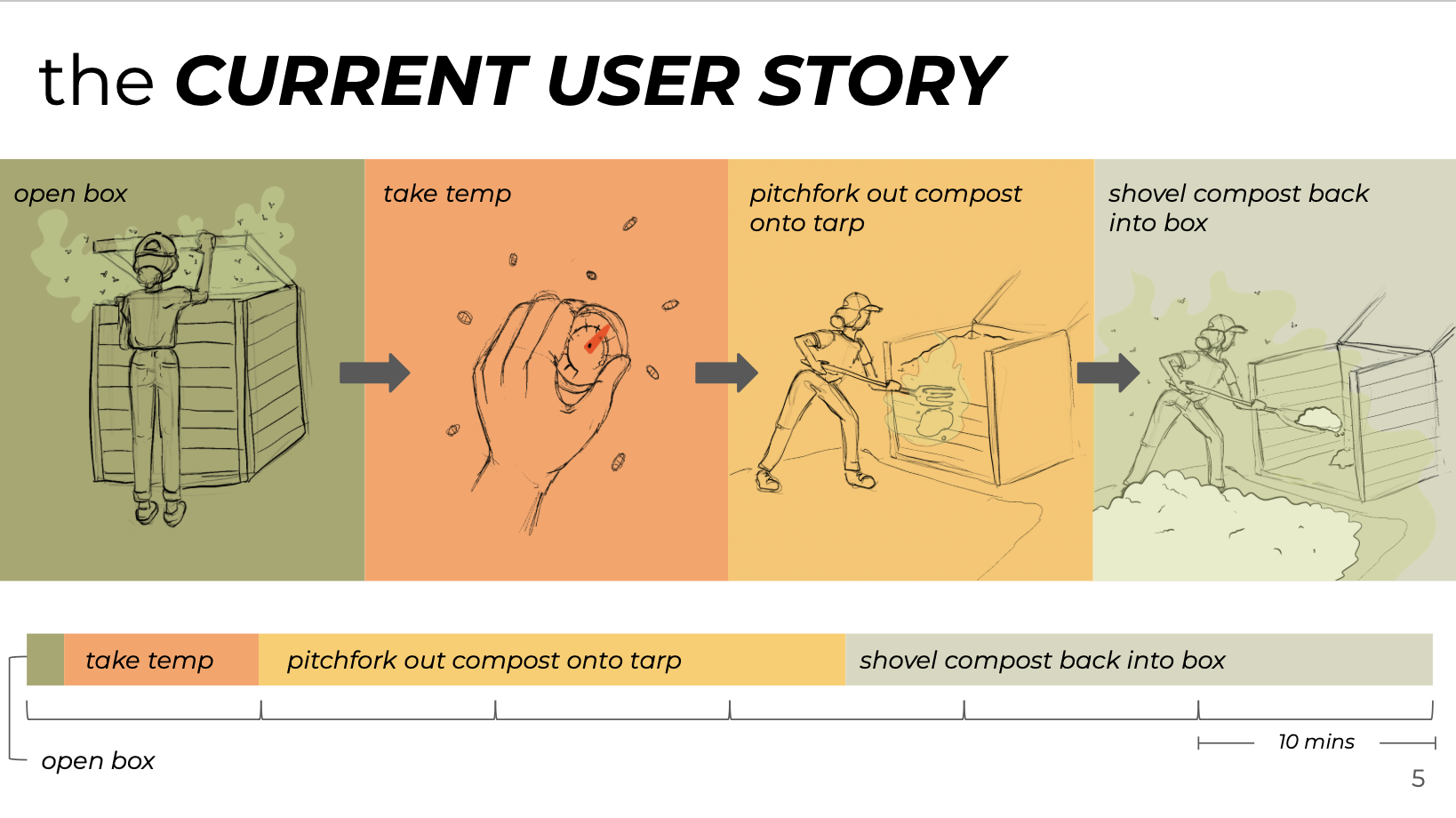
The process was time consuming, labor intensive and frankly a little gross.
Exploration
How could we make this solution more interesting. After all, we are students who like to build stuff. We explored a few options to help Harvest cycle break down compost faster that were more avant guard if you will.
The main problem: Compost breaks down the most in the middle of the bin where the heat from the bacteria is hottest. So the workers at Harvest Cycle had to regularly empty their compost box, mix it and then put it back in the box.
Solution: rotate the compost more!
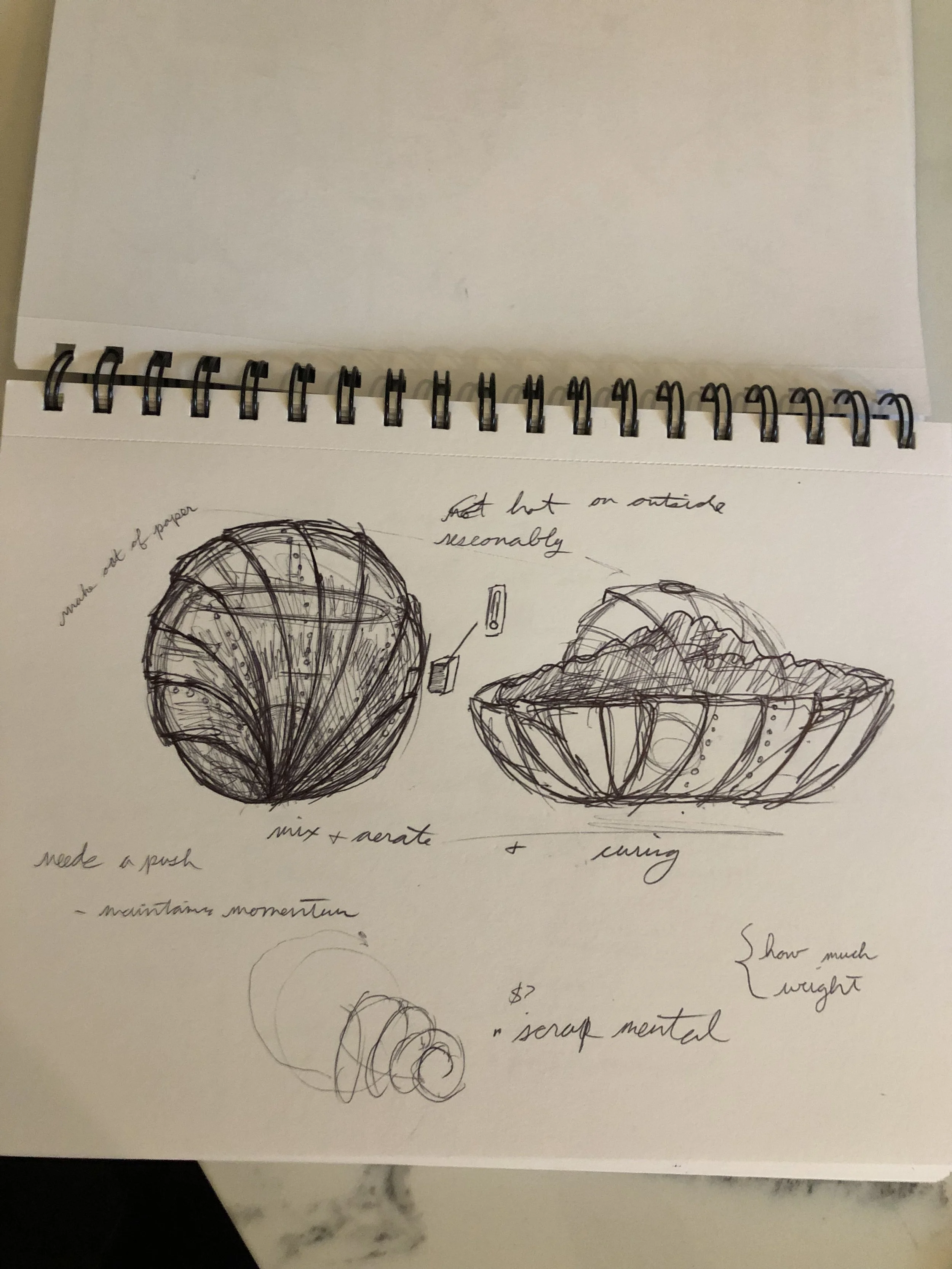
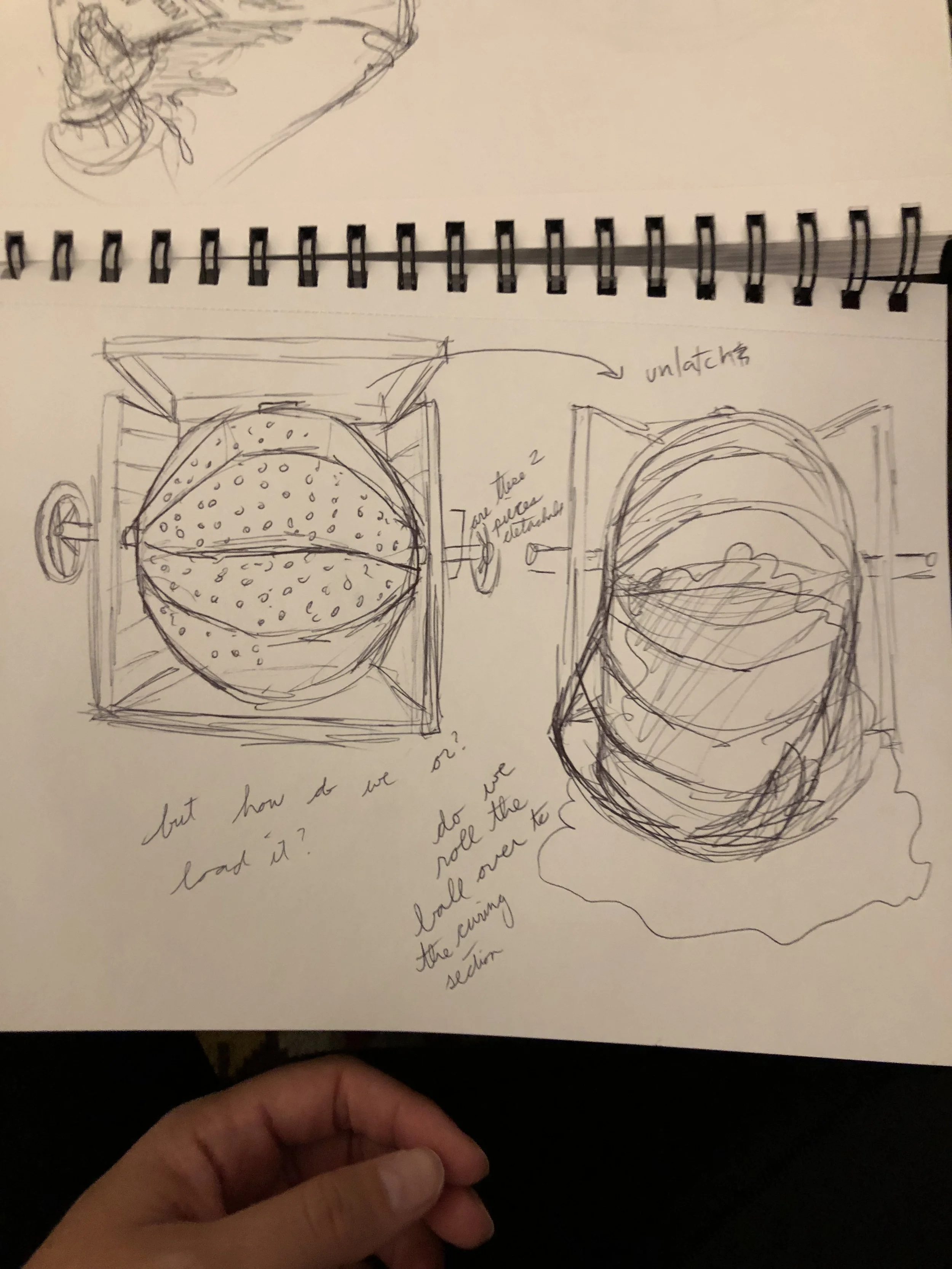
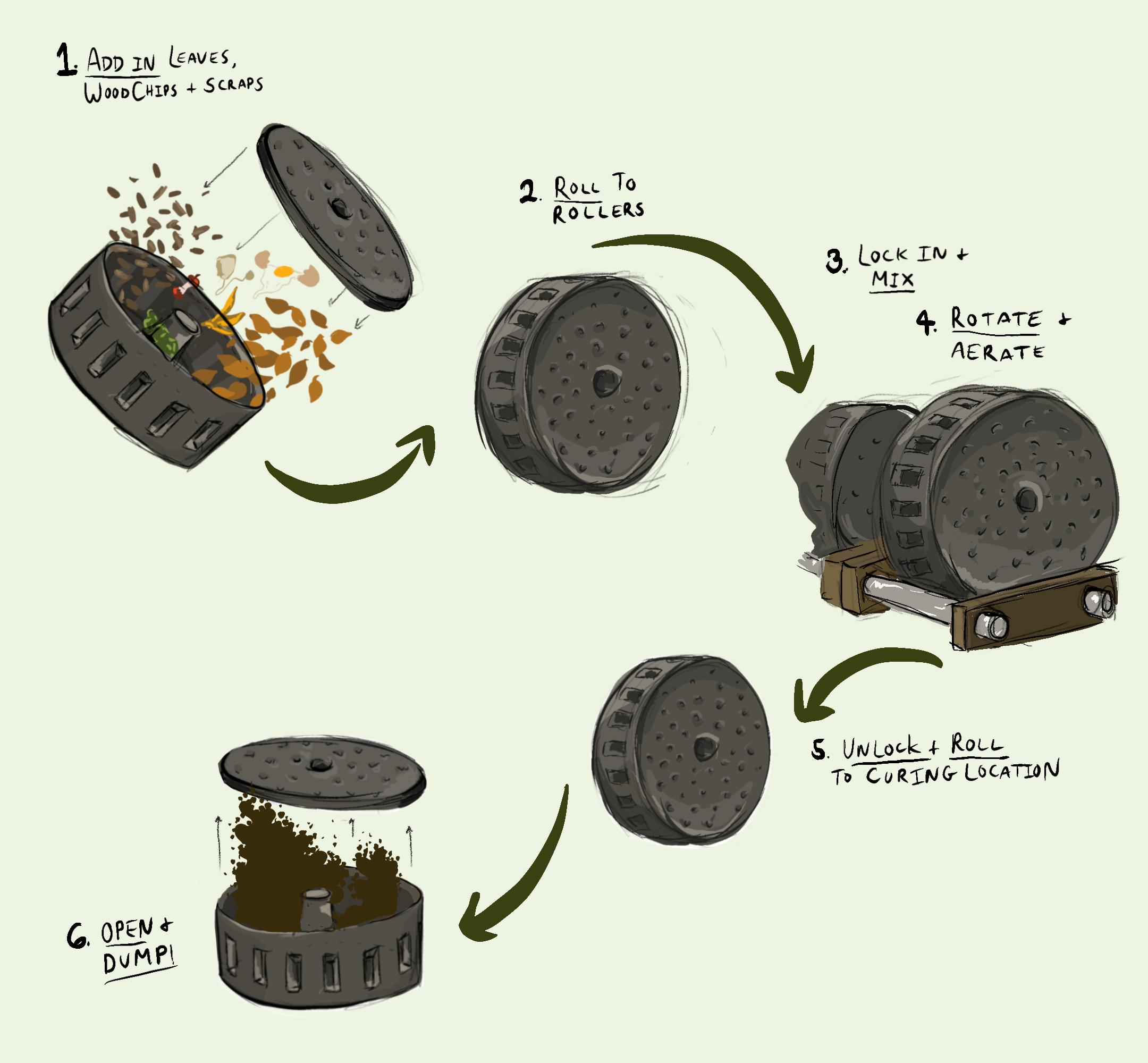
Option 1: Rollies Pollies
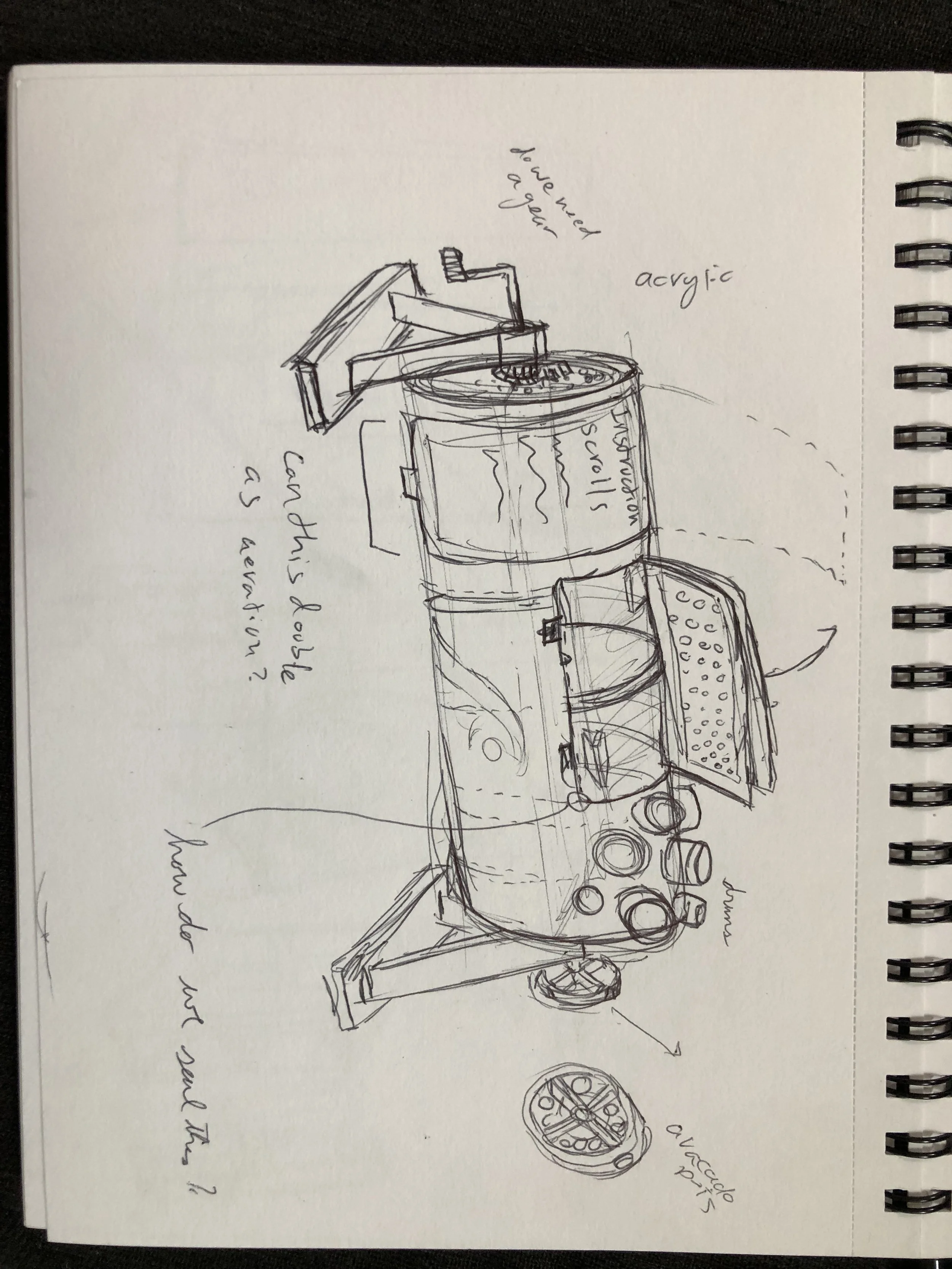
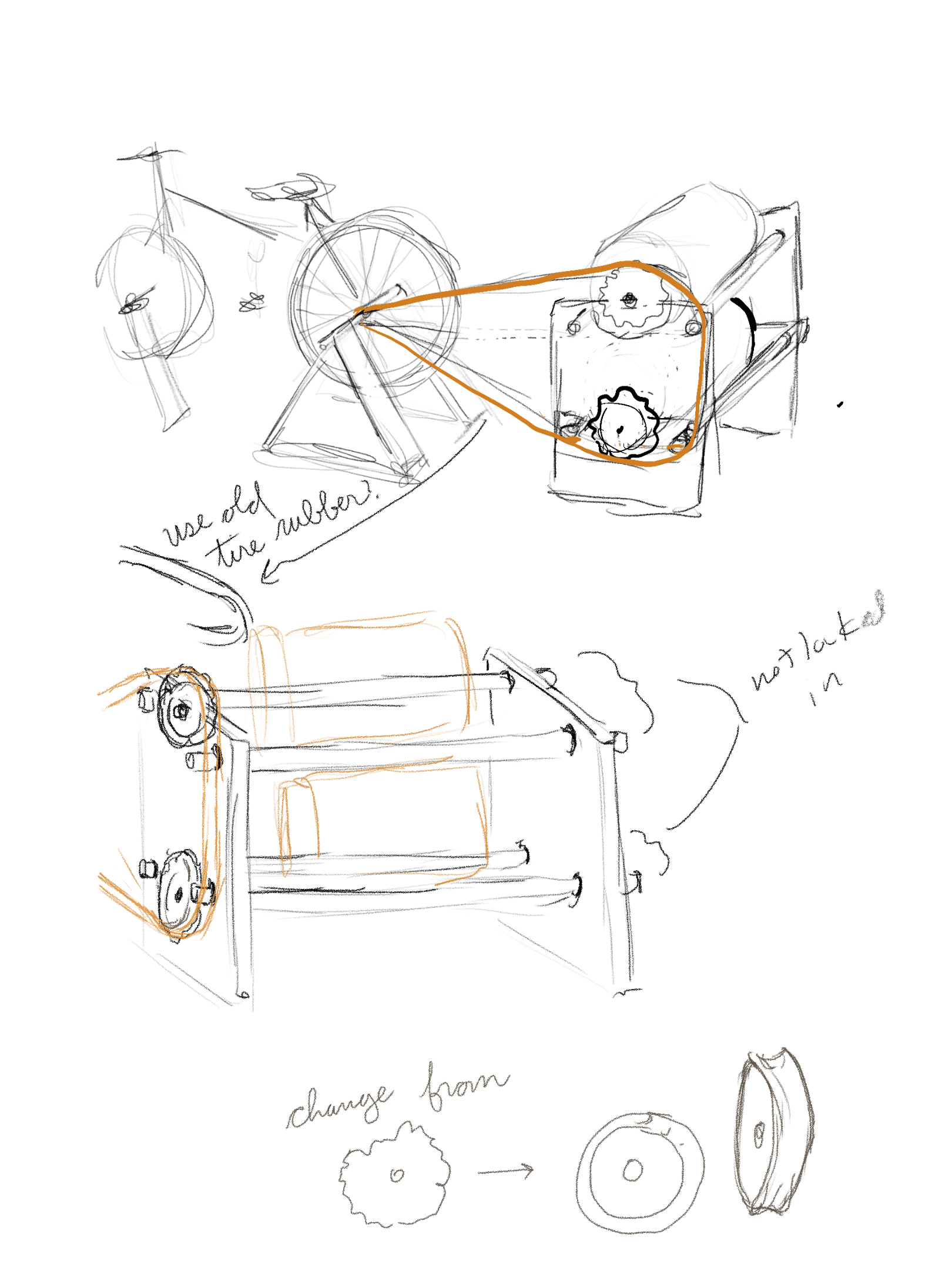
Create a Flinstones style wheel that they could load up with compost and put onto rollers so that the workers at Harvest cycle could easily rotate the compost in a fraction of the time of the current system.
Problems: These wheels could be hip high due to the amount of weight an individuals ability to lift and put on the rollers.
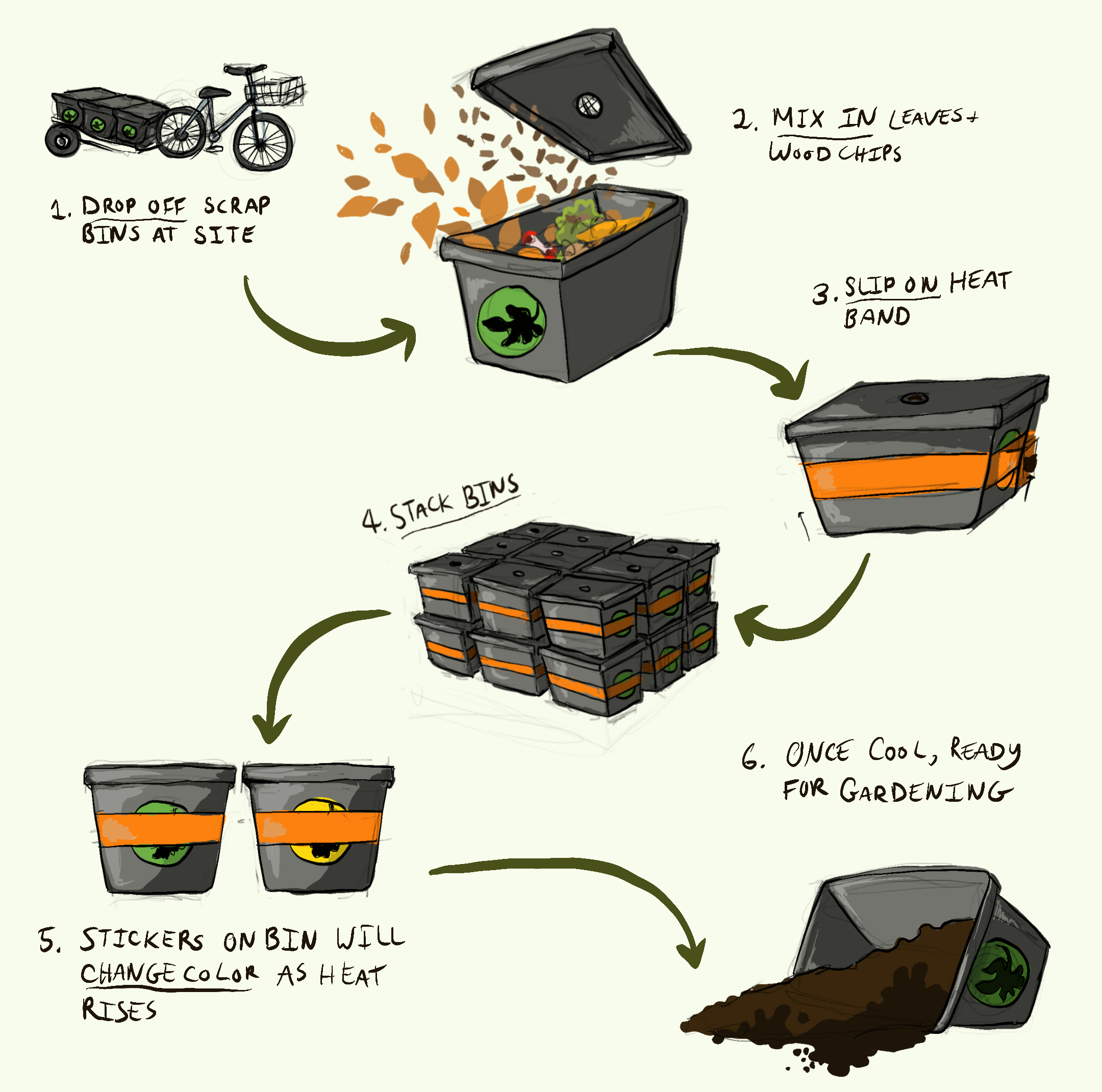
Option 2: Mood Bins
We all had a mood ring at one point in our lives, do not lie, little did we know (idk maybe you did at that age) that is was solely responding to our body heat.
We though that the current bins were too big to effectively break down the compost at an even rate, so what if we separated the compost into smaller bins and attached heat bands to the compost in order to encourage equal decomposition and when the compost was one even temperature, the sticker on the front would turn yellow telling us that the compost is ready to be used as soil.
Problem: We would need so. many. bins. Also these heated bands were expensive and we wanted to create a solution that Harvest Cycles could easily replicate.
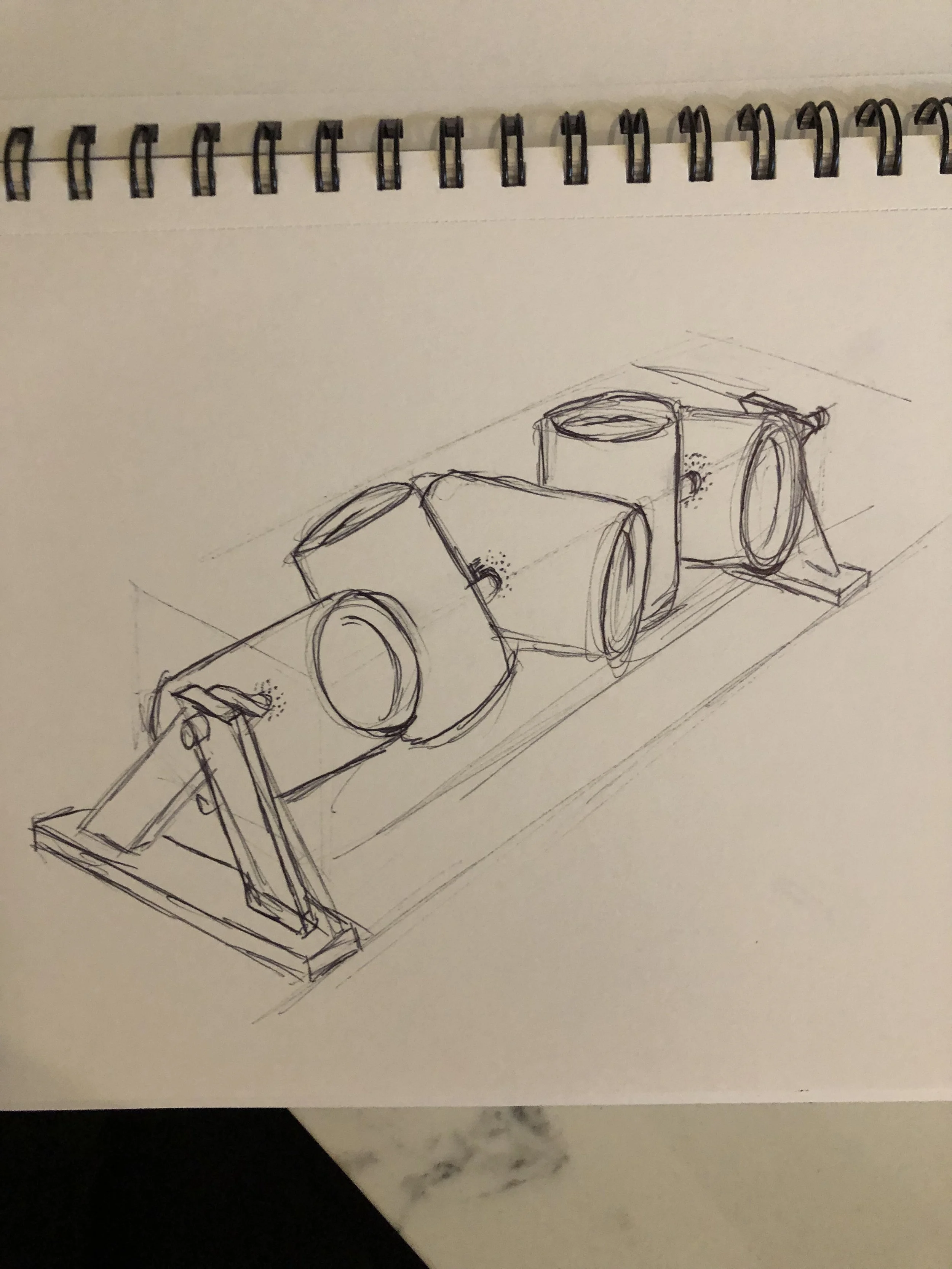
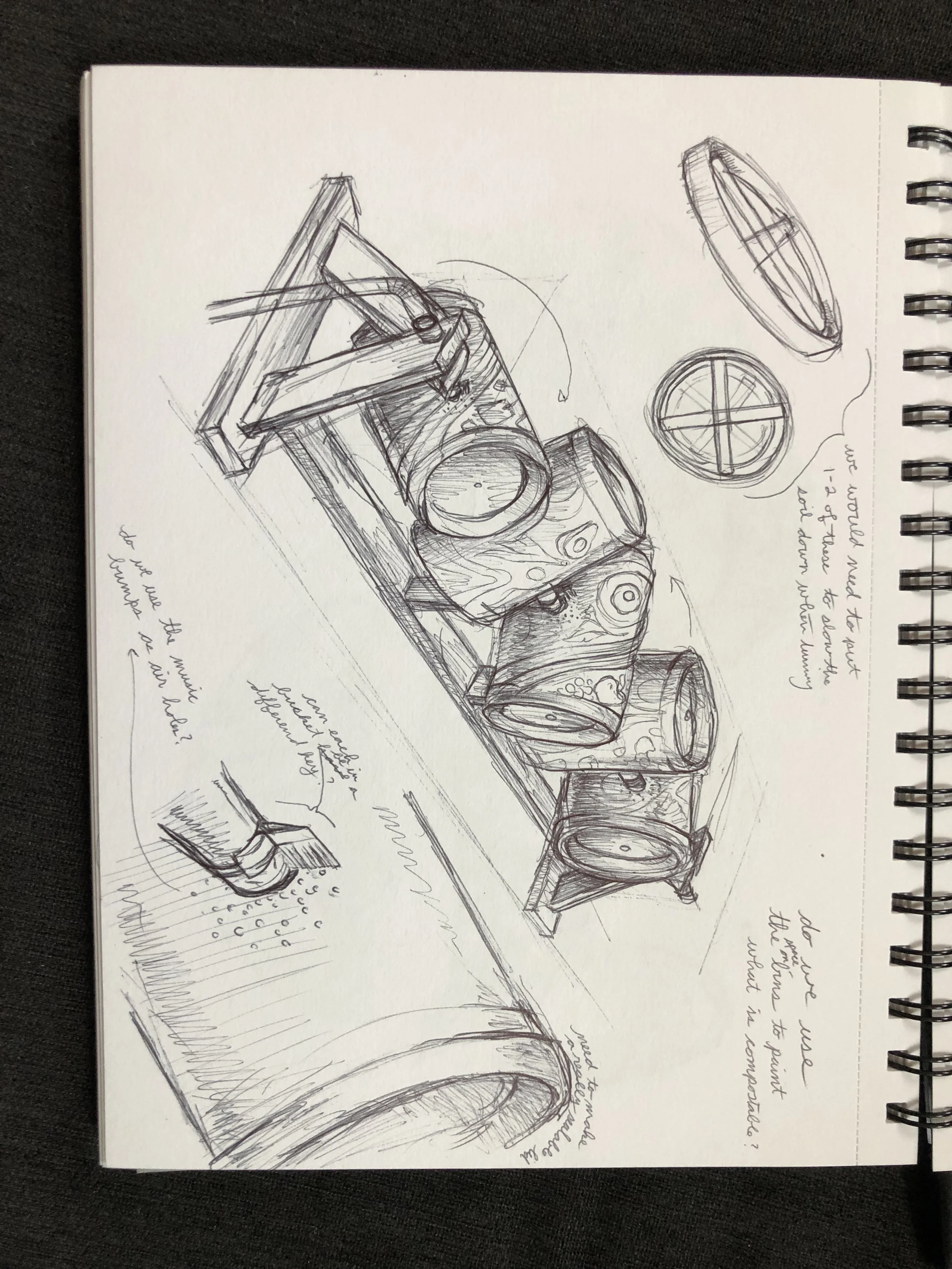
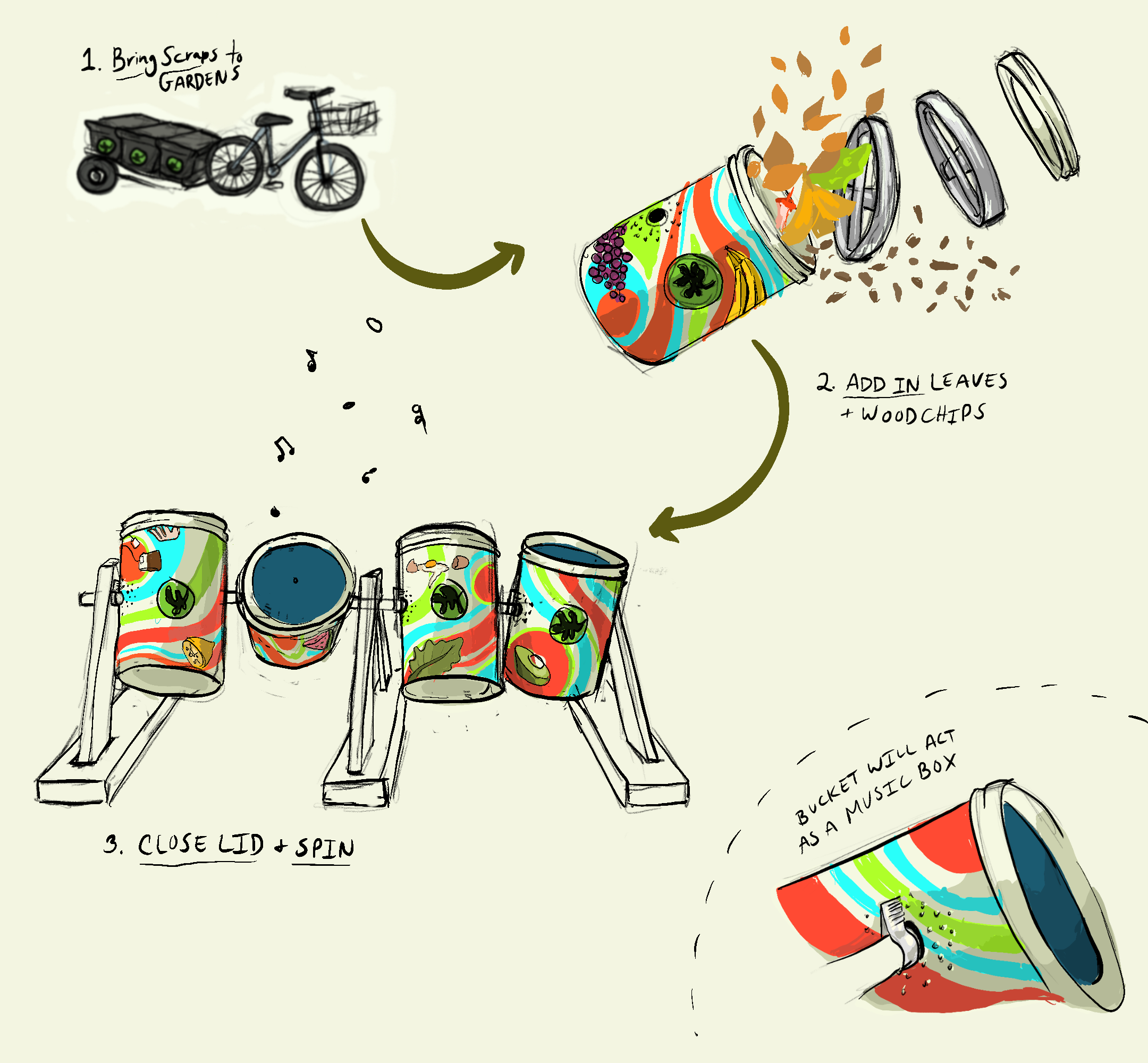
Option 3: Musical Bins
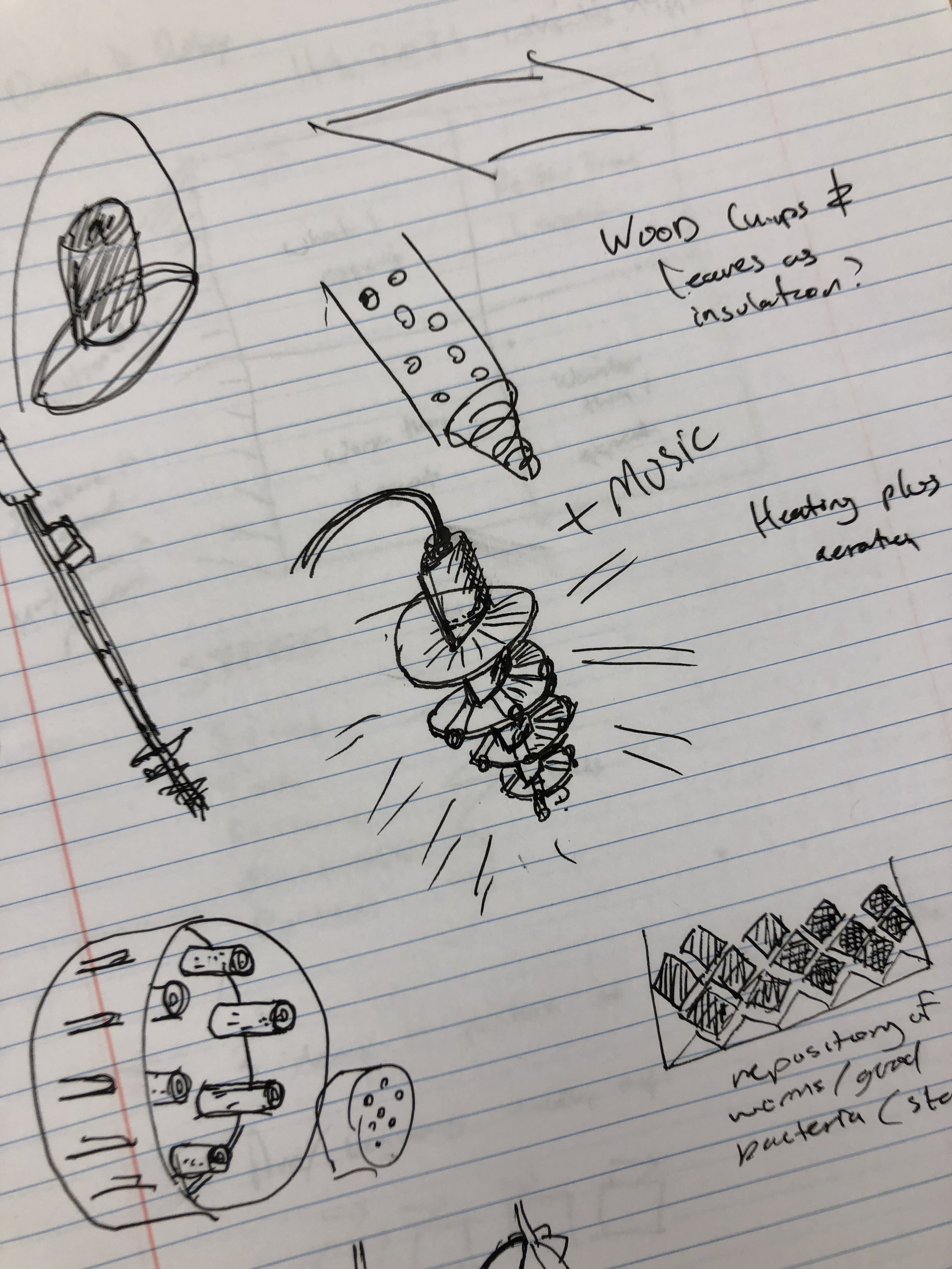
Our last solution was something that combined community, music and compost. How could we get the community involved in a way that sparks wonder. The idea was that we would fill each bucket half way, in order to decrease weight, and allow the public to play this new musical instrument by turning the compost.
Problem: We would need these all over the city. We would be relying on people interact with them. And lastly, they would smell…
The Final Product
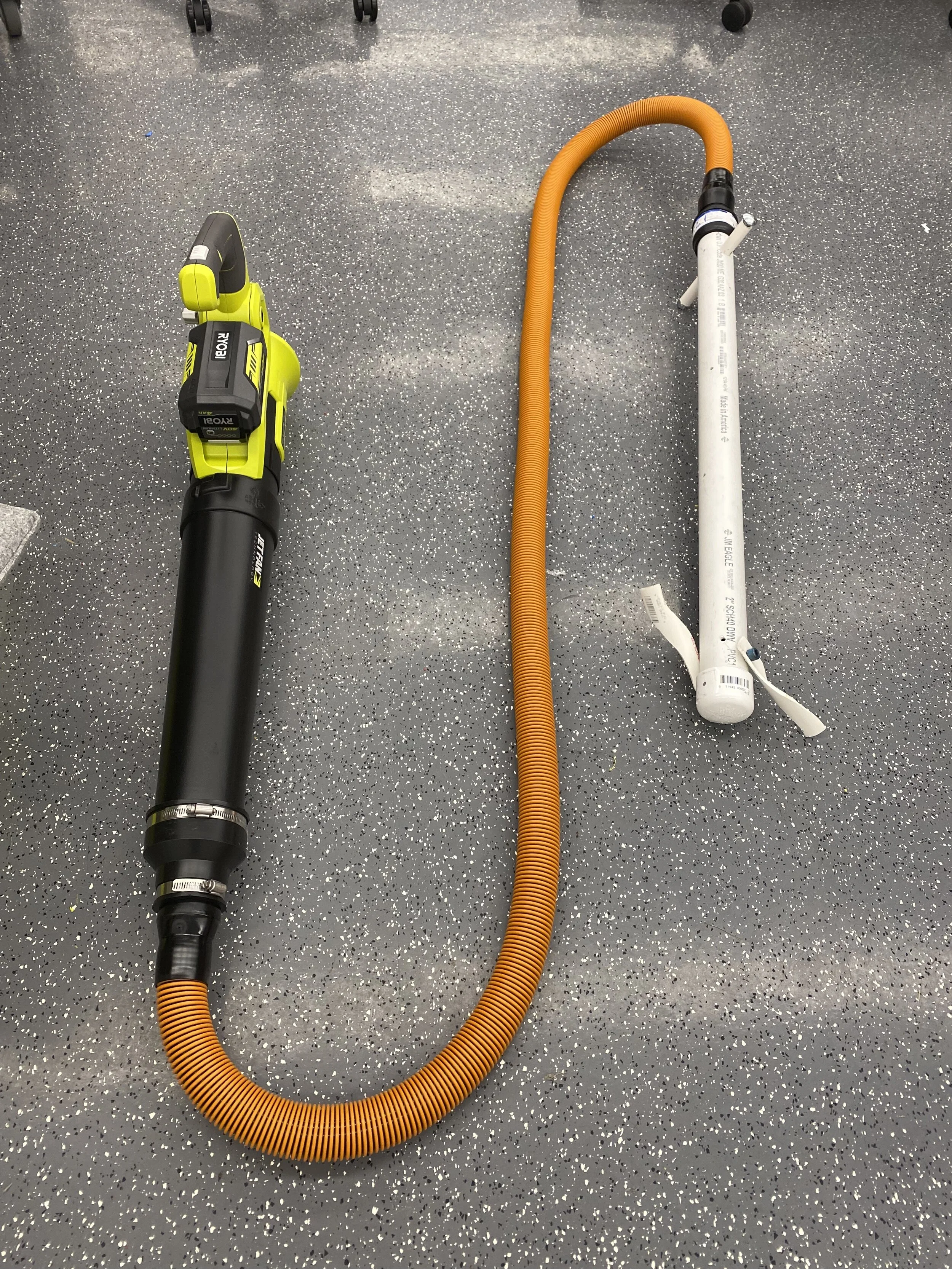
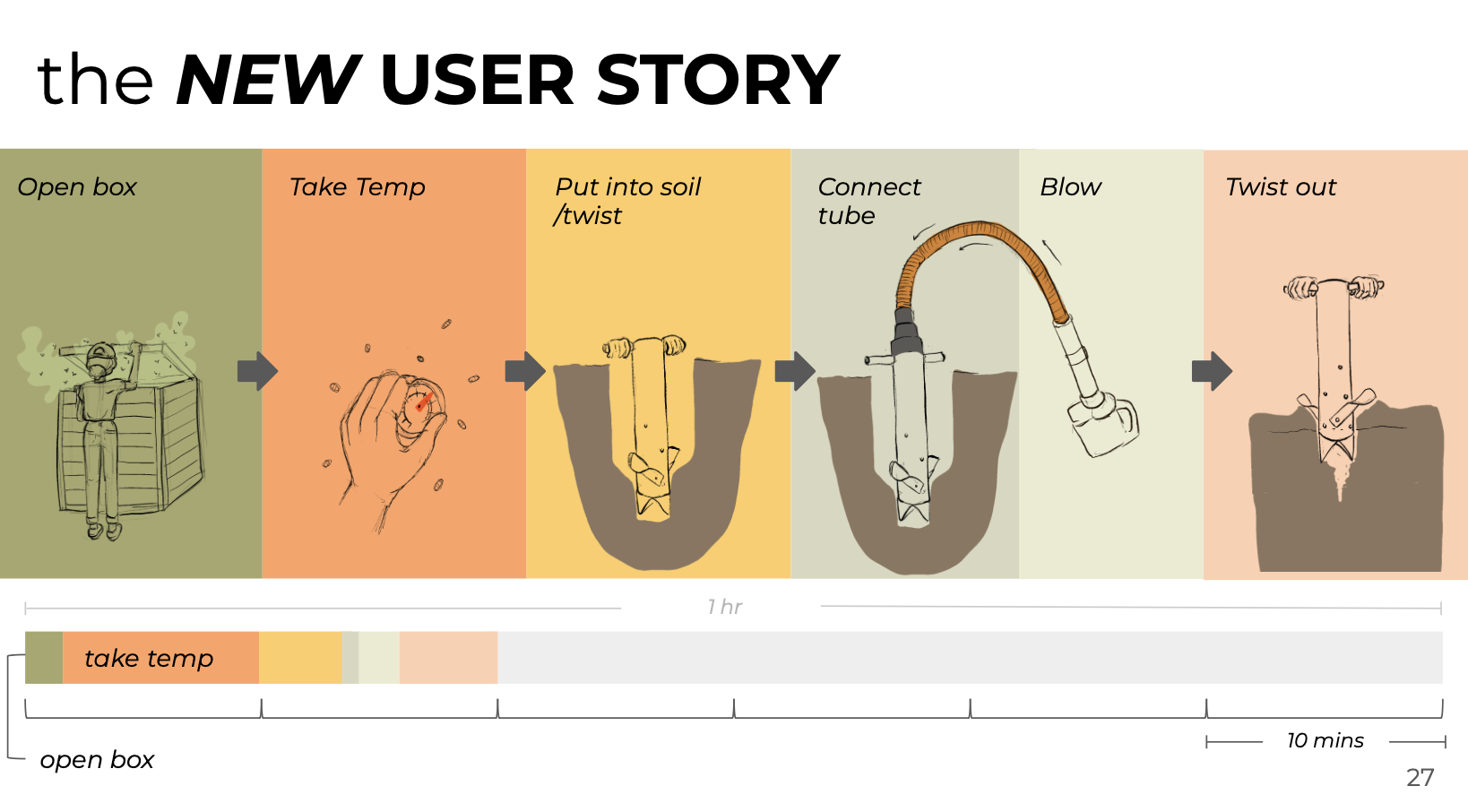
Guess what? We ended up with none of these solutions. The most efficient and effective solution was by far the least sexy thing we could think of, a PVC pipe, some drill holes and a leaf blower.
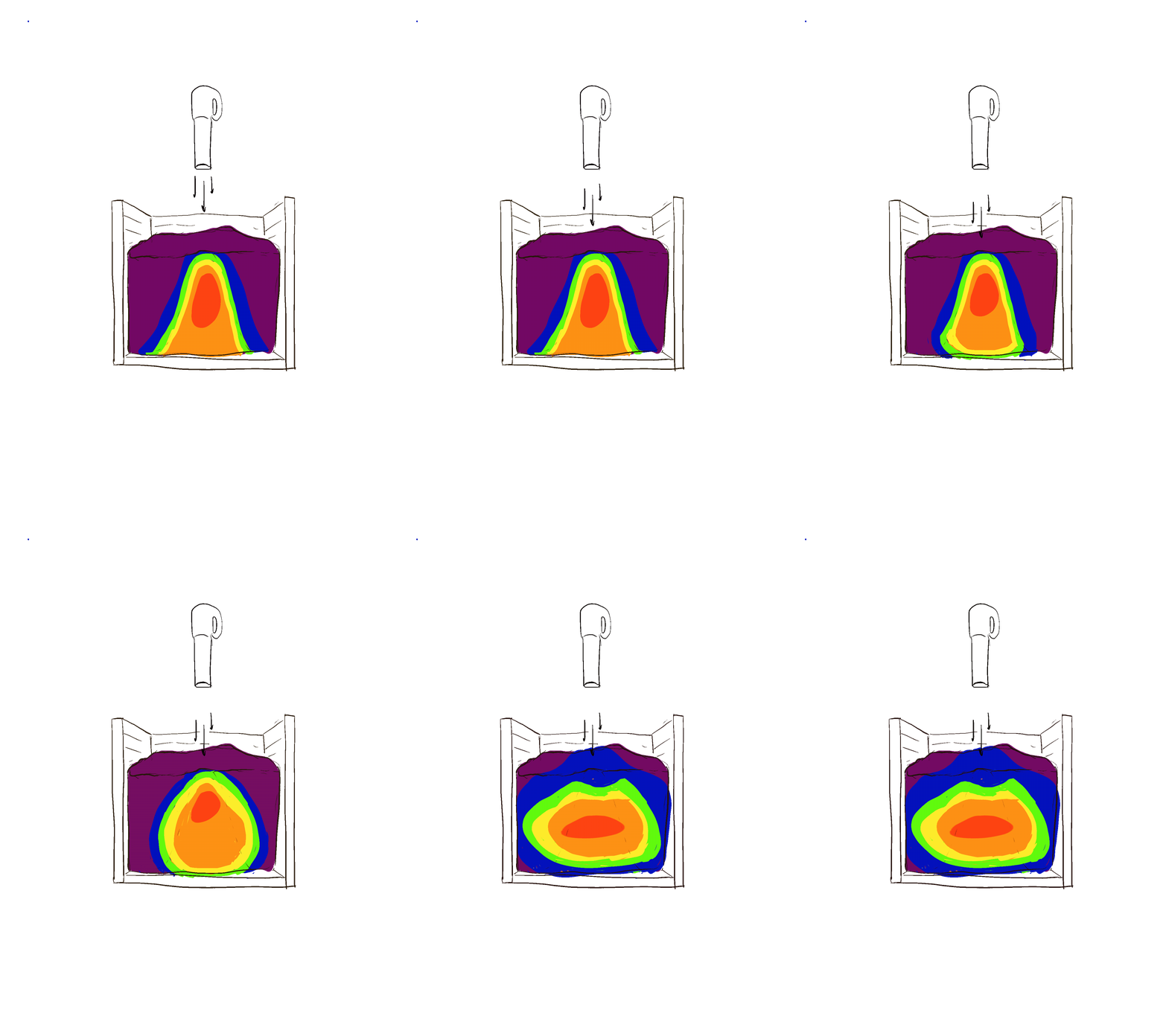
This solution was highly replicable, cheap and effective. Once again, all of the decomposition is happening at the middle of this compost bins, where the bacteria is running wild. What if, we just get enough airflow in there to disperse the bacteria in order to get a nice and even decomposition right? Sounds stupid but it worked.


Testing
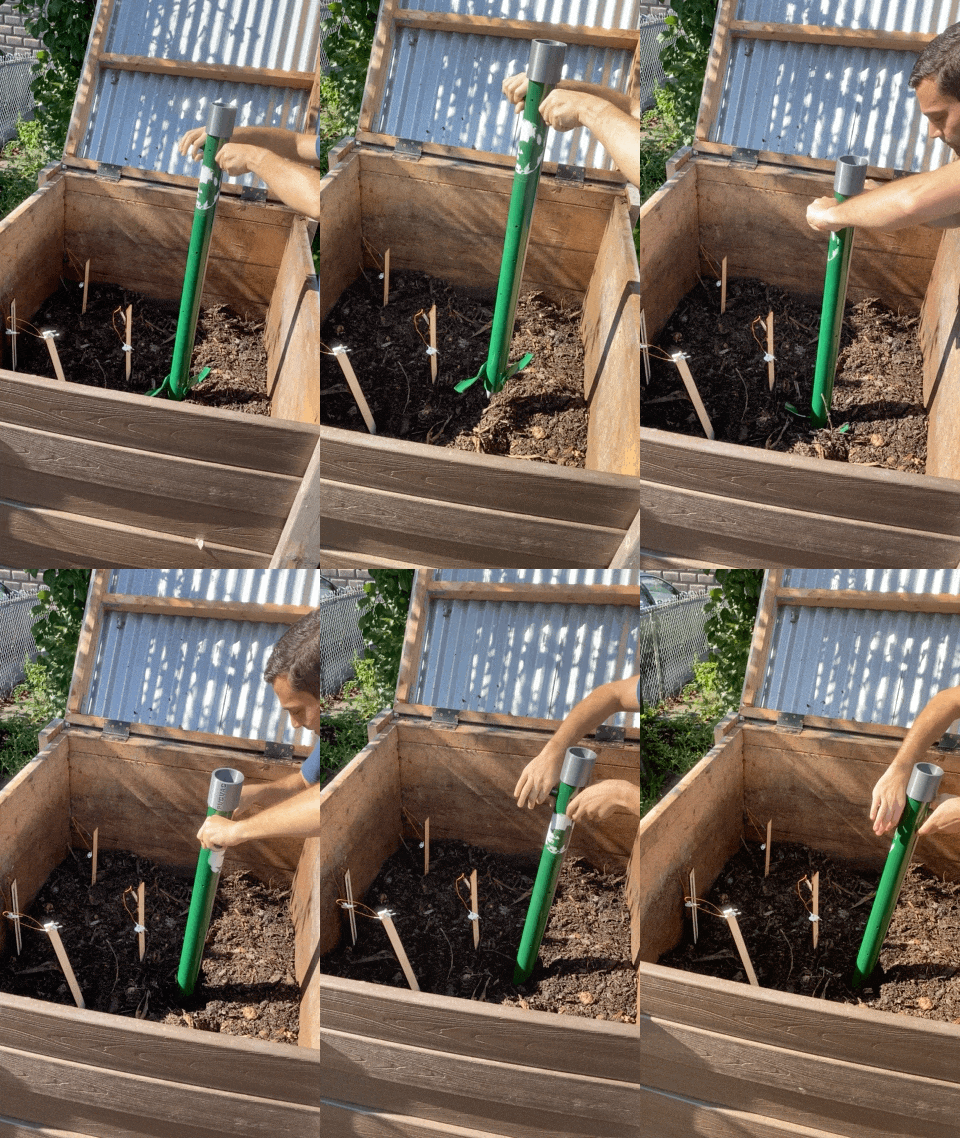
We went back and tested the compost 6 times over the course of 2 weeks. Each time, placing our super advanced pipe and attaching the hose and closing the lid on the bin in order to maximize bacteria distribution within the soil. We set up thermometers all throughout the soil to test heat distribution and found that our little machine worked.
We were happy with where the product ended up but in order to make a full conclusion, we should have tested for a few months and into the winter months to see if we had the same outcome but ultimately, we only had 4 weeks for the project.